

The Versatile Deer
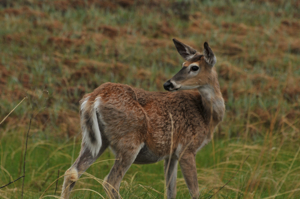
Have you ever spotted a White-Tailed deer? These deer are usually tannish brown or some shade of brown to almost gray. White-tailed Deer usually have a white patch on their necks. Their tails are around 9-11 inches long, when they are full-grown. The tails are mostly brown with white on the underside of it, hence the name “White-Tailed Deer.” White is also on their belly and the insides of their legs.
These deer can survive a variety of habitats. These habitat regions include: temperate and tropical. They also live in some terrestrial biomes which include: chaparral, forest, rainforests, and scrub forests. Living in these biomes makes them very versatile animals.
They feed on a variety of vegetation depending on their habitat. In the Eastern Forests, which is where the Great Smoky Mountains are, they eat buds, twigs, maples, and shrubs. When it is winter conifers are often eaten as a staple food. Out in the athirst desert area (Texas, Arizona, California, Nevada, etc.) these deer munch on yuccas, prickly pear cactus, and tough shrubs.
White-tailed Deer are crepuscular (kri-PUS-kyuh-lur), meaning that they eat during the twilight hours—dusk and dawn.
Mating takes place between the months of October and December. In the doe’s first pregnancy she usually gives birth to one fawn, but after her first she may give birth to two to three fawns at a time. That’s a lot of offspring! Understandably the female doe is very protective of her offspring. She hunts for food for them, while leaving them in a safe place for up to four hours at a time.
White-Tailed Deer are designed well to reproduce and live in multiple regions.

