

The Fun-loving Canada Jay:

You may have heard of the famous Blue Jay, who lives across eastern and central North America, but have you ever heard of the Canada Jay? These jays are known by many names including: Gray Jay, Whiskey Jack, Moose Bird, Gorby, and Venison Hawk. These birds also hold a vast number of habits that are unique from other birds.
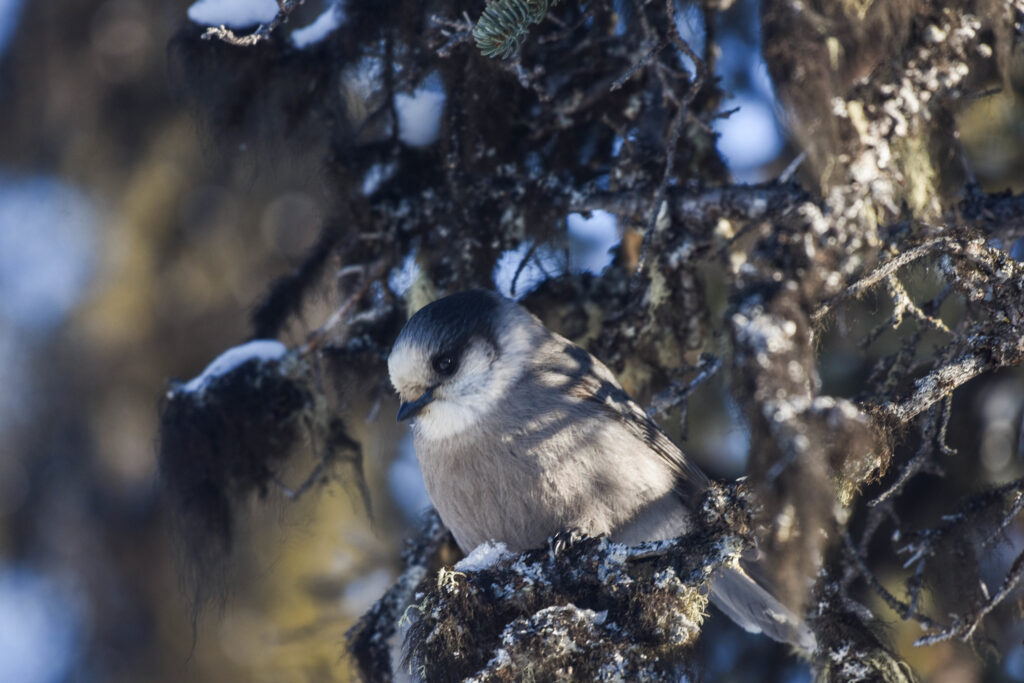
As for habitat, these birds live in forests and subalpine regions in the northern parts of North America.
As your visiting the park make sure to keep an eye out for a fluffy, gray songbird a slightly more compact than a Blue Jay, with a short black bill, white cheeks, dark back of the neck.
They partake in a wide range of food. Eating just about anything, from arthropods, to berries, poky birds, fungus, insects, undersize mammals, invertebrates they find by wading in water, and people food, these birds would definitely not be described as picky eaters.
In fact, if you plan to undertake camping at Crater Lake National Park you will most likely be catching sight of these guys a lot, as they are known for being fearless when it amounts to food, and have earned their nickname of “Camp Robber.” Be prepared to defend your campsite, park ranger!
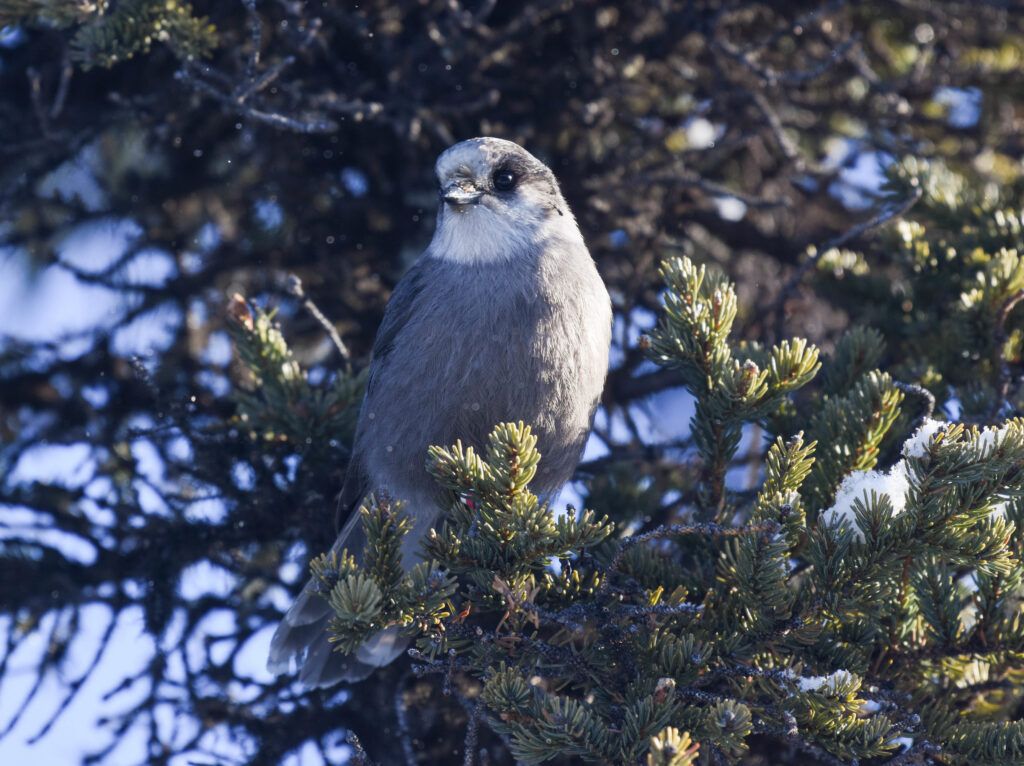
Also, these birds are naturally very curious and may follow you on your hiking trail. What’s so unique about these birds, besides their vast diet and “Camp Robber” tactics? Well, instead of finding and eating food all year long like other birds, these birds cache their food, like squirrels, including the Golden-Mantled Ground Squirrel, who also lives in Crater lake National Park along with this bird.
They store their food year round by molding their food into a blob that they form by using their saliva, and hiding it behind tree bark and other places, much in the same way squirrels bury nuts.
The Canada jay also has some fascinating habits concerning producing young. They produce from 2-5 eggs. The male starts to build the nest before the female pitches in to help. The pair breeds for life. Isn’t that sweet?!
Also, if you happen to visit Crater Lake National park during the months of February or March, make sure to keep your eyes, and your binoculars peeled at the treetops, park explorers, for bird nests that could possibly hold baby Canada Jays, since these birds hatch their young during these months of cold weather.
Although it may seem strange for these birds to hatch their young in winter, it is doable because of these bird caches that they hide during the year, so while other birds try to stick out the winter and stay warm, the Canada Jays are busy as bees, caring for their young.
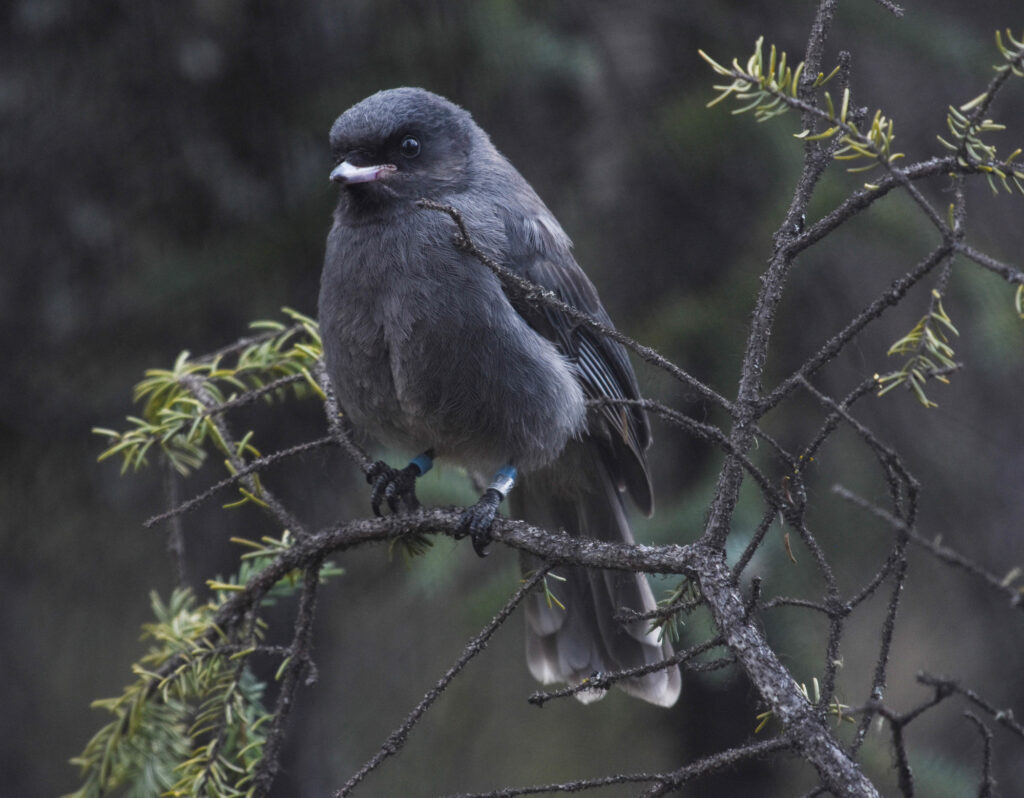
An enthralling habit of the young baby birds in the nest is: the most lofty baby in the brood will kick out his siblings out of the territory. Fortunately, the siblings, who are old enough to be resilient at this stage, are able to survive this blow and look for their own safe havens. The baby bird, who kicked out its siblings, will stay in mom and dad’s territory’s until it falls in love and claims its own territory to live in and starts its own family.
The Canada jay is a fun-loving feature to Crater Lake national park, so keep an eye out for these jays and watch out for their “Camp Robber” tactics, park explorers.

