

Cuban Brown Anoles of Biscayne National Park
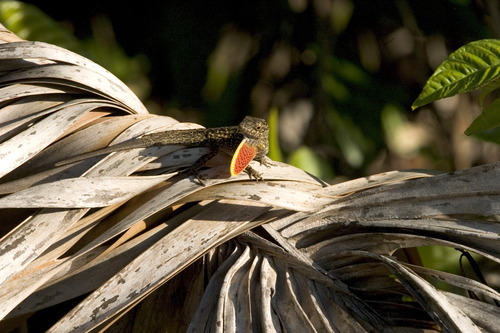
Biscayne National Park in Florida is home to a lizard called the Brown Anole.
Rapidly this lizard’s population has spread across the Southeastern United States. This is due to few predators and its adaptability. In Alabama, California, Florida, Georgia, Hawaii, Louisiana, and Texas, the Brown Anole, which is also called the Cuban Brown Anole, is located there. It has also advanced to parts of Mexico, and even areas in Asia.
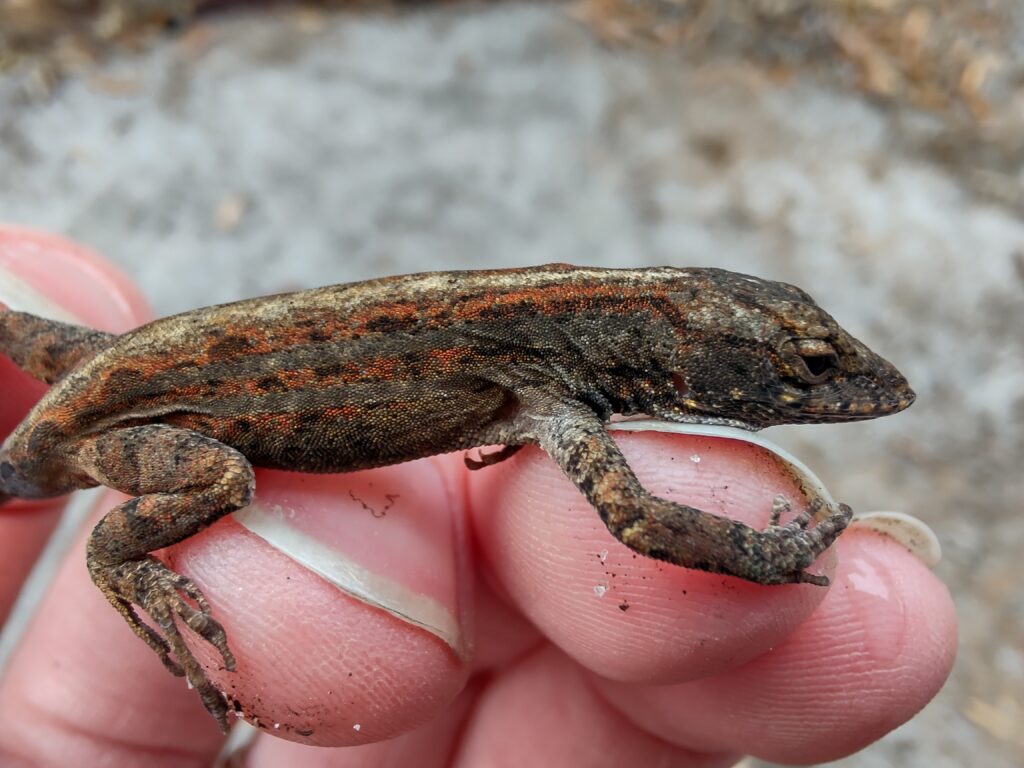
But you may wonder, why is this lizard called the Cuban Brown Anole, when it dwells in countries outside of Cuba? The answer to this is that the Cuban Brown Anole is actually native to Cuba. The reason for its residence outside of its native home is because it’s invasive.
The lizard is petite and slender, about 5-8 inches long and the male’s dewlap is a lot more orange and yellow colored than the green anole that possesses a more pinkish-red dewlap. A dewlap is a colored flap on the male Anole that he uses to move in and out to attract the females with. The Brown Anole’s tail has a slightly raised ridge that continues all the way to the base of its neck. These lizards don’t lack design.
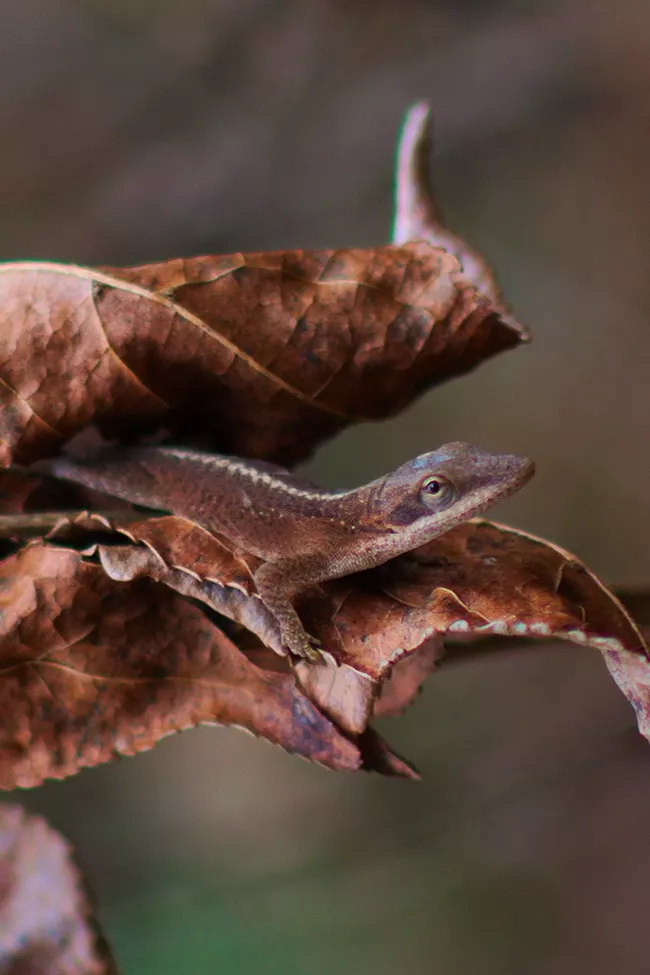
Furthermore they are diurnal, meaning that they are awake during the day. For instance, humans are awake during the day and sleep at night, so we are considered diurnal also.
During the breeding season for Brown Anoles, which is in the summer months, they are generally not aggressive except when under certain conditions. They more consistently attack intruders regardless if the intruder is showing aggressive behavior signs.
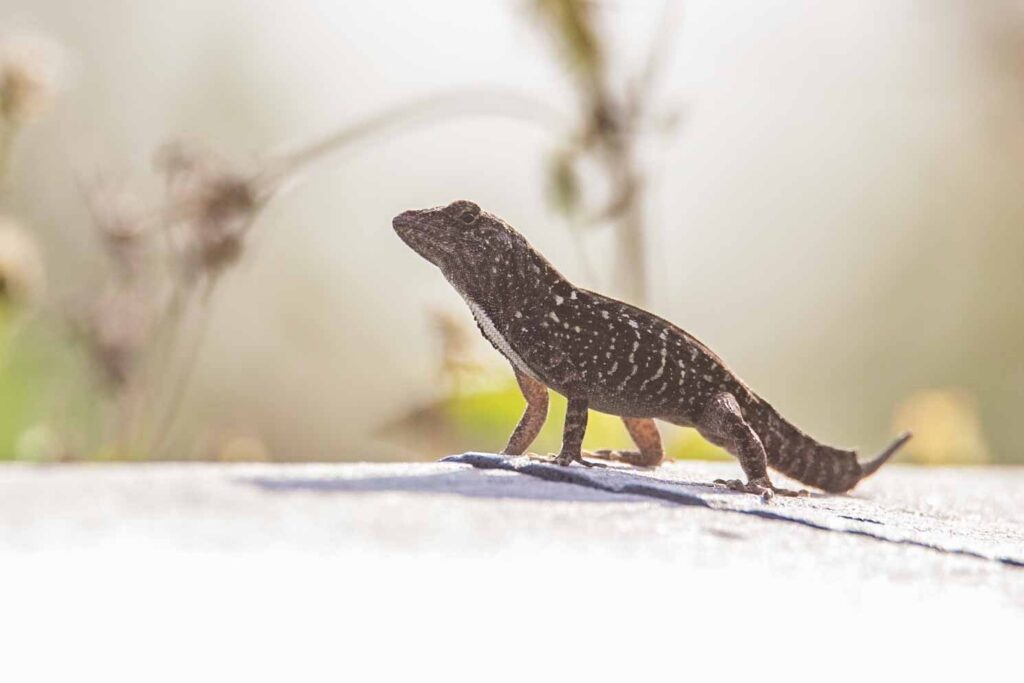
When they are one year old, these lizards become old enough to breed.
Like all animals anoles have to eat food. Their common diet consists of: arthropods, insects, and invertebrates, such as earthworms and snails. Eating these bugs provides a significant way of keeping the bug population in check.
Cuban Brown Anoles inhabit Biscayne National Park, and possess certain physical features.

